
 5 min read
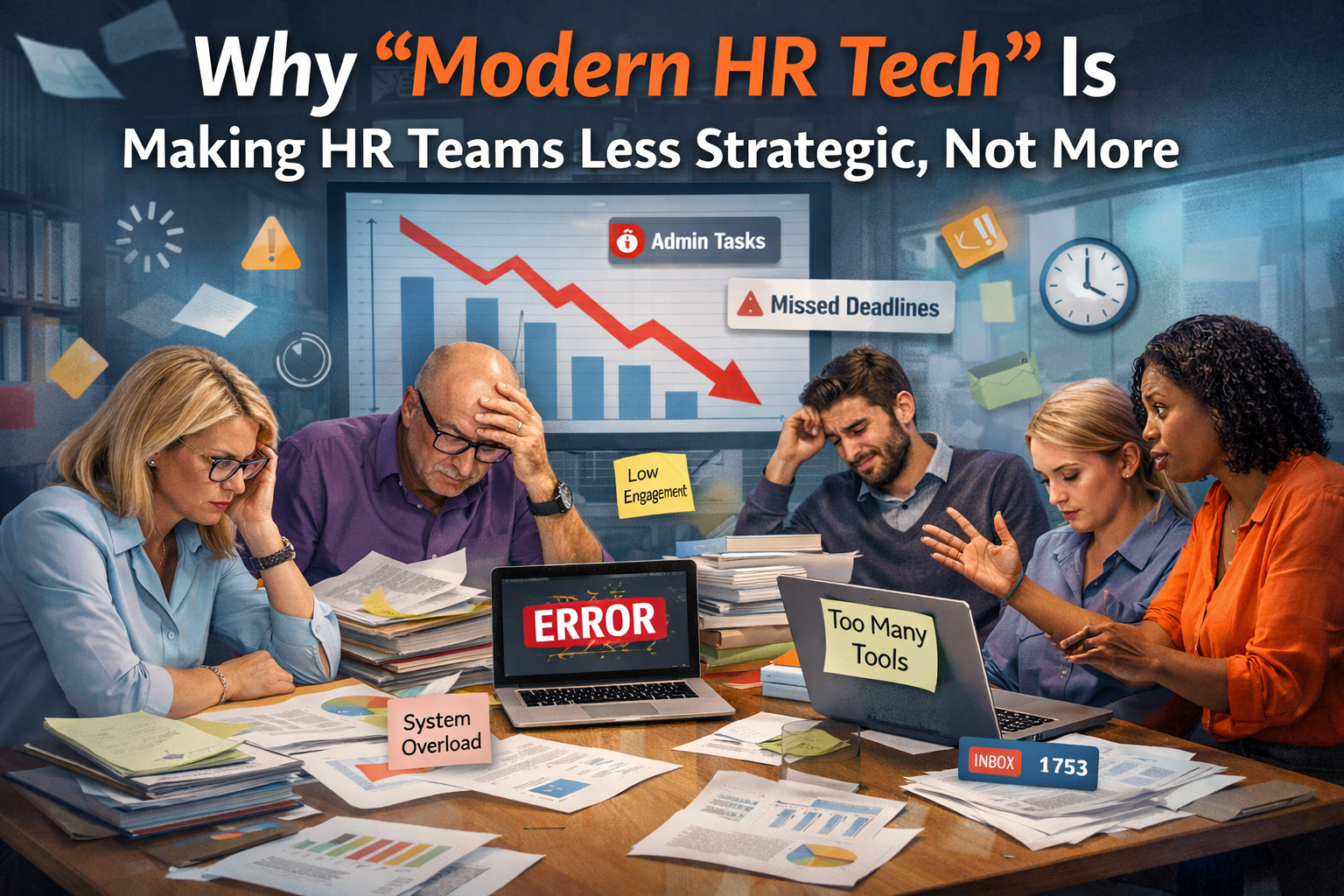
In the modern workplace, HR teams are expected to be strategic partners, guiding talent planning, shaping culture, and steering organizational performance. Yet paradoxically, the very technology designed to make HR more efficient is too often relegating HR to the role of administrator.
The Paradox of Modern HR Tech
It’s a strange paradox: organizations pour significant investments into HR systems, HRIS, automation tools, and AI agents, with the promise of liberating HR professionals to focus on strategic, high-value work. But many HR teams find themselves buried under new technology that marginalizes their role instead of elevating it.
Here’s why:
- Tools Before Strategy
One of the biggest mistakes organizations make is buying HR technology without a clear, business-aligned strategy. As CHROFirst observes, many companies adopt tools simply because they are trendy, not because those tools are aligned with actual employee needs or organizational goals. Without that strategic alignment, technology becomes a cost center, not a value creator. - Low Adoption, High Disengagement
Even the most advanced platforms fail if they're not used. According to SHRM, new HR tech often stalls because people aren’t properly trained or they don’t see how the tools support their day-to-day; in other words, change management gets ignored. When HR professionals don’t adopt their own systems, why should others? - Data Overloads Without Insight
Modern HR tools can produce mountains of data: engagement metrics, productivity scores, attrition forecasts. But data without context isn’t strategy, it’s noise. As noted by CHROFirst, many HR teams lack the analytical maturity to interpret data in a way that drives meaningful decisions. - The Empathy Deficit
There’s also a human cost. Automating feedback, recognition, or wellness check-ins risks depersonalizing critical moments. According to DigitalDefynd, over 50% of employees report feeling less human interaction when HR shifts too much to automated systems. This weakens trust and reduces opportunities for HR to build genuine relationships and influence. - Governance and Alignment Challenges
A recent academic analysis of digital HR transformation highlights a “clash between the logic of algorithmic efficiency and the reality of human workplace dynamics.”Without aligning tech initiatives with the real strategic needs of the business, such as talent development, employee experience, or diversity, HR risks implementing shiny tools that don’t move the needle.
Why This Matters for HR in Mid-to-Large Companies (500–1,000 Employees)
For HR teams in organizations of this scale, the stakes are even higher:
- Organizational Complexity: With hundreds or thousands of employees, disparate systems and fragmented data can easily bloat. If HR doesn’t manage that complexity, operational inefficiencies multiply.
- Talent Leverage: These companies likely have specialized roles and leadership layers. HR should be shaping succession, guiding leadership development, and informing business decisions, not just managing workflows.
- Change Proportionality: Rolling out new systems across a workforce of 500–1,000 people is non-trivial. Poorly adopted technology can create more disruption than benefit.
- Strategic Impact: At this size, HR has the potential to drive large-scale change (culture, performance, retention), but only if burdened administrative tasks don’t hijack its focus.
So, what's the solution? How HR Can Reclaim Its Strategic Role
If modern HR tech is making HR less strategic, here’s what HR leaders can do to re-center their function:
- Align Tech and Business Strategy
Begin every tech investment with a clear “why.” What business problem are you solving? Is the tool helping you deliver on talent strategy, employee engagement, or leadership development, or simply automating a process? Ensure technology decisions flow from business goals, not the other way around. - Embed Change Management from Day One
Rather than assuming people will adopt, build structured training, governance, and user engagement into your rollout. As SHRM experts recommend, don’t just deploy, train, iterate, and support. Consider digital nudges and prompts to sustain usage. - Build Analytical Competency in HR
Invest in data literacy and interpretative skills. HR leaders need to convert raw metrics into actionable insights, not just dashboards. Develop a culture that interrogates data, asks “what does this mean for people strategy,” and uses it to drive decisions. - Balance Automation with Empathy
Use technology to augment, not replace, human connection. Rebuild touchpoints for shared conversations: feedback delivered via coach-guided sessions, not just an app; recognition with personal nuance, not only automated badges. - Govern Ethically & Thoughtfully
As your HR tech stack evolves, formalize governance around usage, fairness, data protection, and human oversight. Address questions like: Who reviews the algorithms? Are we comfortable with how AI is making decisions? Build transparency, not black boxes. - Continuously Evaluate Impact
Don’t treat technology as a “set and forget” solution. Regular review: Is adoption holding? Are KPIs improving? Is the tool driving against the original strategy? If a platform isn’t delivering value, reconsider or reconfigure- purposely.
At its best, HR is not just a support function; it’s a central driver of organizational stability and future growth. The right technology can free HR to play that role. But without strategy, discipline, and a human-first mindset, modern HR tools risk turning HR into a transactional back office.
For mid-to-large companies, this is a pivotal moment. As HR leaders, you can decide whether technology becomes a burden or a lever for real strategic impact. Getting this right isn’t just good for HR, it’s essential for the business.
