
 6 min read
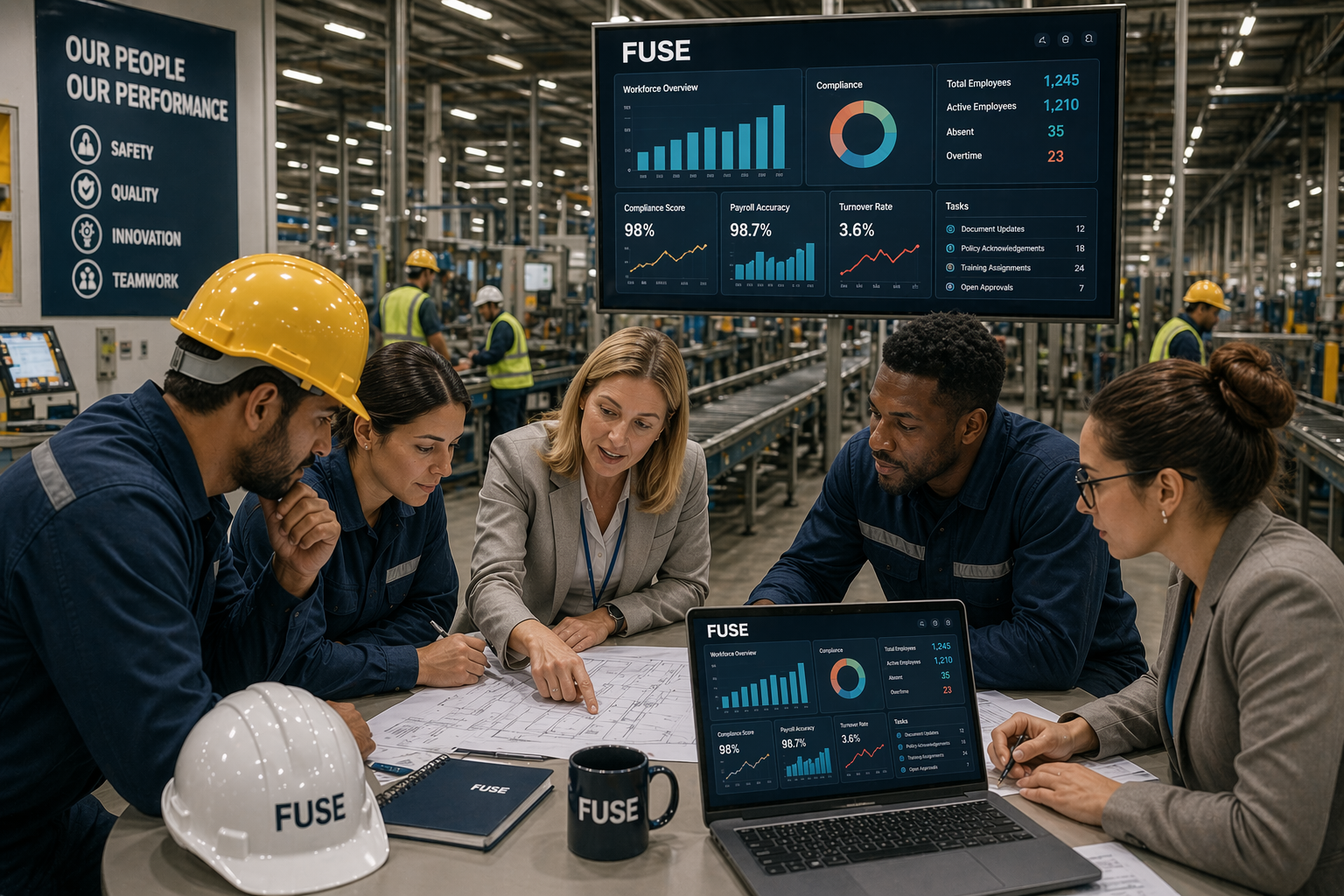
Walk into any modern manufacturing facility, and you’ll see precision everywhere, robotics calibrated to millimeters, supply chains measured in minutes, and production schedules engineered for maximum efficiency.
Yet behind the scenes, many HR teams supporting those operations are wrestling with technology that feels anything but precise.
Disconnected HR systems. Slow support when payroll issues arise. Implementation teams that disappear after go-live.
For manufacturers employing 100 to 1,000+ workers, the stakes are especially high. When HR technology underperforms, the impact ripples across the plant floor: delayed onboarding for shift workers, compliance risks, payroll disruptions, and frustrated employees.
And more often than not, the problem isn’t just the software.
It’s the lack of a real partnership with the vendor behind it.
The Cost of Choosing Software Without a Partner
Manufacturing HR leaders know that operational success depends on strong vendor relationships. You wouldn’t purchase critical production machinery without demanding service guarantees, training, and long-term support.
Yet many organizations treat HR software differently.
They evaluate feature lists. They watch polished demos. They sign a contract.
Then reality hits.
The implementation stalls. Support requests take days. Integration problems surface. Training is minimal. And suddenly, HR is left managing a complex system with limited guidance.
The result? Adoption slows, managers avoid the platform, and the system becomes an expensive, underutilized tool.
In manufacturing environments where workforce stability, compliance, and efficiency are essential, that outcome simply isn’t acceptable.
The Questions Manufacturing HR Should Be Asking
A strong HR technology partner should be able to answer hard questions before any contract is signed. Manufacturing HR leaders should expect transparency around several key areas.
Support and Service Levels
Manufacturing never sleeps. Many facilities operate around the clock, across multiple shifts and locations. When HR issues arise, waiting days for a response is not realistic.
HR leaders should demand clarity on support expectations:
- What are the guaranteed response times?
- Are support hours aligned with manufacturing schedules?
- Is there a clear escalation path for urgent payroll or compliance issues?
- Will you have a dedicated account team that understands your business?
Service Level Agreements (SLAs) should not be vague promises. They should be measurable commitments.
Implementation That Actually Works
One of the biggest mistakes organizations make is underestimating the complexity of HR system implementation.
For manufacturing companies, that complexity increases dramatically:
Multiple locations.
Union rules and labor compliance.
Complex pay structures and shift differentials.
Seasonal hiring surges.
A credible vendor partnership must include a clear implementation strategy, not just software access.
Manufacturing HR leaders should ask:
- Who owns data migration and validation?
- How will legacy systems integrate with the new platform?
- What does the training plan look like for HR teams, managers, and employees?
- What support is available during and after go-live?
Without structured onboarding and change management support, even powerful systems struggle to gain traction.
Training, Adoption, and Change Management
Technology only delivers value when people actually use it.
In manufacturing environments where many employees work on the shop floor rather than behind desks, usability and training become even more critical.
A strong vendor partnership should include:
- Manager and employee training programs
- Mobile-first workflows for shift-based workforces
- Adoption strategies and ongoing coaching
- Clear communication frameworks for rollout
Manufacturing HR teams are already balancing safety programs, workforce scheduling, and compliance requirements. The right partner helps reduce that burden, not increase it.
Roadmap Transparency Matters
Manufacturing organizations evolve quickly. Facilities expand. Workforces grow. Compliance requirements shift.
Your HR system must evolve alongside those changes.
That’s why roadmap transparency matters. HR leaders should expect vendors to openly discuss:
- Upcoming product innovations
- Planned integrations and automation features
- Investments in analytics, reporting, and workforce planning
- Long-term product vision
The goal isn’t just to solve today’s challenges. It’s to ensure the platform continues to support the organization as it scales.
Data Migration and Long-Term Support
One of the most underestimated aspects of HR system transitions is data migration.
Manufacturing organizations often hold years of employee records, compliance documentation, and payroll history in legacy systems.
A true HR technology partner should offer:
- Structured data migration support
- Data validation and testing processes
- Post-launch optimization and system tuning
- Ongoing strategic check-ins
Because HR technology success isn’t measured at go-live.
It’s measured six months, one year, and five years later.
Manufacturing HR Deserves More Than Software
Manufacturing HR teams play a critical role in keeping operations running smoothly. They manage complex workforces, navigate regulatory compliance, and support employees across demanding environments.
They don’t need another vendor selling features.
They need partners who understand the pressure of the plant floor and the strategic importance of the workforce behind it.
When HR technology partnerships are built correctly, the results are powerful:
Faster onboarding for production workers.
More accurate payroll across complex shifts.
Better workforce insights for leadership.
And HR teams that can focus on strategy instead of troubleshooting software.
For manufacturing organizations looking to modernize HR, the question shouldn’t simply be:
“What can this software do?”
The better question is:
“Will this vendor stand beside us when it matters most?”
Because in manufacturing, the right partnership doesn’t just support HR.
It supports the entire operation.
