
 6 min read
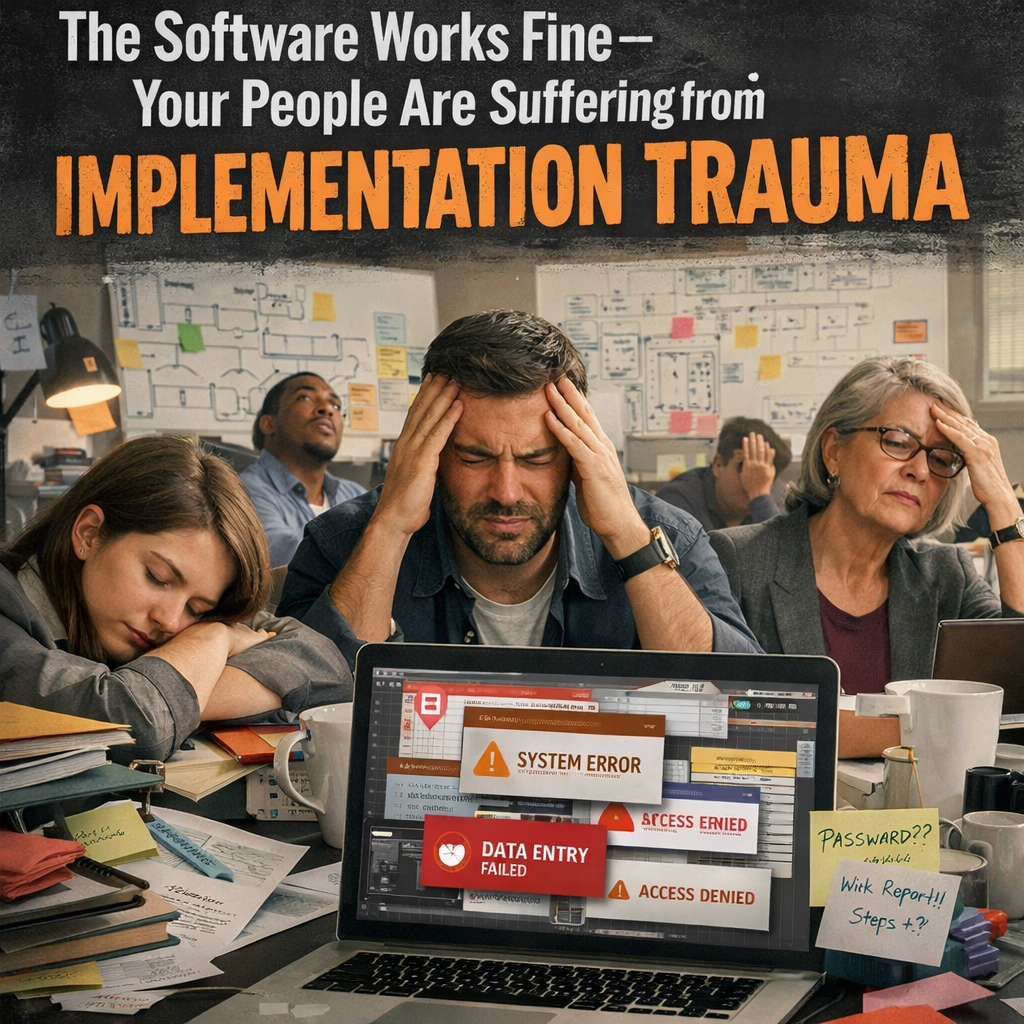
In many mid- to large-sized companies, the promise of new HR software is undeniable: greater efficiency, streamlined workflows, richer analytics, and improved decision-making. But all too often, once the deployment is complete, HR leaders and people managers discover an uncomfortable truth: the system may technically work, but the people don’t. This silent suffering has a name: implementation trauma.
Why Implementation Trauma Happens- Even When the Software Is Solid?
1. The Human Side Gets Undervalued
One of the biggest reasons HR tech initiatives fail isn’t a bug in the software; it’s a lack of attention to change management. As noted by SHRM, human behavior, not technology, is the real barrier: if users don’t adopt the system, ROI plummets.
Many organizations treat implementation as a one-and-done technical task, but workplace transformation is deeply social. As Tuomo Ropponen warns, when companies ignore change management, they assume users will automatically figure out the new system. That assumption rarely holds.
2. Misalignment Between Strategy and Tools
Research shows a troubling gap: HR digital transformations often lack strategic alignment with broader business goals. Without clarity on why the technology is being introduced, and what business metric it’s meant to move, the system becomes a shiny silo, rather than a tool for transformation.
Moreover, in a top-10 list of common implementation failures, insufficient planning, unrealistic expectations, and poor ROI measurement all rank highly. Companies may underestimate how much time, budget, and human resources it takes to do the work well.
3. The Hidden Load on HR Teams
A surprising insight from HR trend research: when HR software is rolled out, the vendor team leads the installation, but HR internal teams bear the bulk of the effort. These internal workloads, data cleaning, process redesign, training, and governance, often go unplanned, putting immense strain on HR professionals who are already stretched thin.
4. Poor Adoption & Low Trust
Even after go-live, adoption rates often disappoint. According to PeopleStrong, lack of prolonged training, inadequate post-launch support (“hypercare”), and resistance from employees lead to a cascade: low engagement, workarounds, or a return to the old way of doing things. Without strong governance and continuous engagement, employees may never answer the critical question: “What’s in it for me?”
5. Governance, Data, and User Participation Gaps
Failing to involve users in the implementation, especially early on, is a mistake with deep roots. Sociotechnical system theorist Enid Mumford taught us decades ago that successful system design needs to account for both social and technical needs.
Further, data migration errors, insufficient performance indicators, or incompatible workflows can all trigger frustration and build resistance.
Why HR Is on the Frontlines of This Pain
In a world where HR is no longer just administrative but deeply strategic, people leaders are bearing the brunt of implementation trauma, often in silence.
- HR owns the change management burden. When a new HRIS or people-analytics platform is introduced, HR is expected to shepherd the transformation, train users, communicate vision, and manage resistance.
- HR manages expectations. They're often the bridge between business leadership (who bought the tool) and employees (who must use it). Without clear narratives, anxiety, distrust, and disengagement multiply.
- HR carries cost and risk. Failed adoption means underutilized budgets, minimal business value, and often, reputational damage. HR professionals are held accountable even when failure isn’t due to technology flaws.
- HR must rebuild trust. After a painful or clunky implementation, it’s HR’s job to restore faith in future technology investments, and that requires empathy, communication, and a willingness to change course.
Emerging Trends Highlighting the Risk (and Opportunity)
- Digital transformation in HR continues to accelerate: nearly 95% of companies are maintaining or increasing their HR tech budgets, including investment in AI and integrated platforms.
- At the same time, major HR systems still fail due to low user adoption: less than a third of employees actively use new HR systems, according to some surveys.
- Change management is no longer optional. Thought leaders emphasize that without structured change programs, communication, stakeholder engagement, training, and reinforced ownership, even the best systems can flounder.
- Governance and ongoing support matter. According to research in the Future of HR report, sustained success comes when HR leads with empathy, transparency, and a long-term governance plan.
What HR Leaders Can Do to Heal Implementation Trauma
If your organization is wrestling with implementation trauma or wants to proactively avoid it, here are expert-backed strategies:
- Embed Change Management from Day One
Build a change management workstream into your project plan. Don’t treat it as a “nice add-on.” Define how you’ll communicate with stakeholders, gain buy-in, and answer the tough “what’s in it for me” questions. - Foster Employee Participation
Involve HR users, managers, and employees early. Apply participatory design principles: understand pain points, listen to concerns, and co-create workflows. This not only builds trust, it creates ownership. - Align Technology with Business Strategy
Before deployment, clearly articulate what success looks like. Set KPIs that both HR and business leadership agree on. Make sure your tech roadmap aligns with long-term organizational goals. - Invest in Training and Hypercare
Training can’t be a one-off. Provide cohort-based onboarding, refresher sessions, and keep a “help desk” mentality long after go-live. Think about super-users or “HR system champions” embedded in departments. - Use Phased Adoption
A staged rollout, where modules or teams adopt the system incrementally, can reduce anxiety, give teams time to adapt, and provide early wins. - Govern, Measure & Adapt
Establish cross-functional governance: clear accountability, risk oversight, and a feedback loop. Track adoption metrics, usage data, and sentiment. Be willing to pivot training or communication based on what you learn. - Prioritize Employee Well-Being
Recognize that major change triggers stress, especially when people feel disconnected from the decision-making process. Transparency, empathy, and support matter. In fact, HR’s role in stabilizing employees during transitions is more strategic than ever. As HR experts recently noted, during turbulent times, people teams are not just implementers; they’re stabilizers.
You might have chosen the right platform, negotiated favorable implementation terms, and launched without a hitch, but if your people are still struggling, you haven’t truly succeeded. Implementation trauma is real, and its consequences ripple through engagement, productivity, and trust.
For HR leaders in mid- to large-sized organizations, healing that trauma isn’t just an “HR problem”; it’s a business imperative. The investments you make in change management, communication, training, and governance today are the same investments that will fuel high adoption, long-term value, and a culture where technology supports people, not overwhelms them.
