
 5 min read
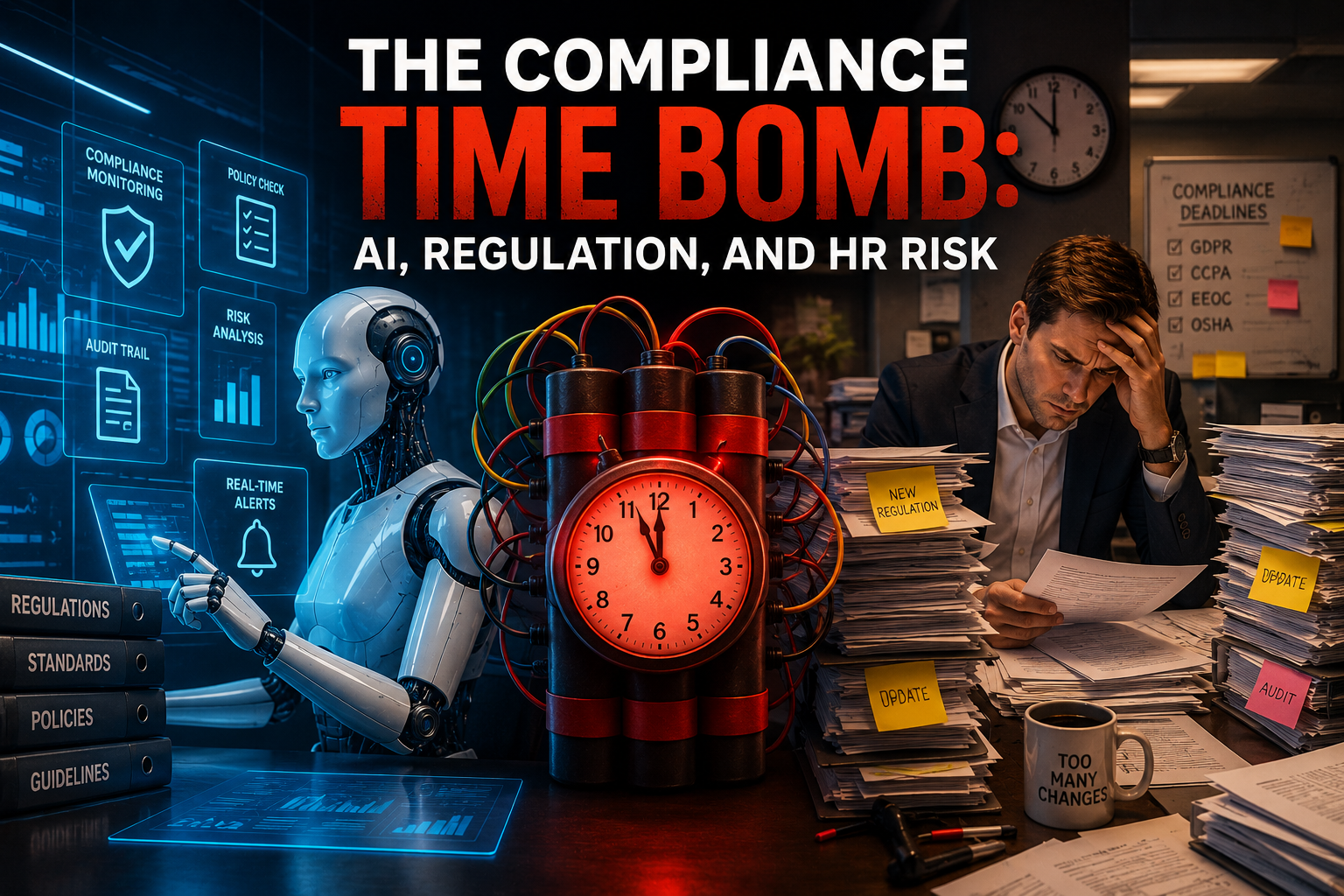
Compliance has always been part of HR. But in 2026, it’s becoming something else entirely.
A moving target.
What used to be a set of known rules and annual updates is now a constantly shifting landscape. Regulations are evolving faster than most organizations can adapt, especially across AI usage, data privacy, pay transparency, and multi-state or global workforce management.
And here’s the problem: HR isn’t just expected to follow the rules anymore.
It’s expected to interpret them, operationalize them, and prove compliance in real time.
That’s a very different level of pressure.
The New Layer of Risk: It’s Not What You Know, It’s What You Don’t See
Most organizations aren’t intentionally cutting corners.
They’re exposed because complexity is outpacing visibility.
AI is being introduced into hiring and workforce decisions, but without clear governance or auditability.
Employee data is flowing across systems, integrations, and vendors without full transparency into how it’s stored or used. Workflows are still built around outdated assumptions, while regulations evolve underneath them.
That’s where the real risk sits.
Not in obvious non-compliance. But in unintentional exposure.
The kind that builds quietly in the background, until it surfaces all at once.
Where It Breaks Down
In most organizations, compliance still relies on:
- Manual checks
- Static policies
- Disconnected systems
That might have worked when environments were simpler.
But today?
Manual oversight can’t keep up with:
- Thousands of payroll variables
- Changing labor laws across jurisdictions
- Real-time workforce changes
- AI-driven decision-making
So what happens?
Small inconsistencies start to creep in:
- A pay rule applied incorrectly across regions
- A data access permission left open
- A report that doesn’t reflect the latest regulation
Individually, they seem minor.
Together, they create a compliance gap that no one fully sees, until it’s audited, challenged, or exposed.
The Compliance Time Bomb
This is the reality many HR teams are operating in.
Everything appears to be working. Payroll runs. Reports generate. Systems function.
But beneath the surface, risk is building.
Because compliance isn’t failing loudly. It’s drifting quietly.
And when it does fail, it’s immediate and unforgiving:
- Financial penalties that hit margins instantly
- Reputational damage that erodes employee and market trust
- Operational disruption that pulls HR back into crisis mode
There’s no grace period. No buffer.
Just impact.
Why More Manual Effort Isn’t the Answer
The instinctive response to risk is to add more checks. More approvals. More oversight.
But that approach doesn’t scale.
It slows teams down, increases dependency on individuals, and still leaves gaps.
Because the problem isn’t effort. It’s architecture.
The Shift: From Monitoring Compliance to Building It In
The organizations that are getting ahead of this aren’t working harder.
They’re working differently. They’re embedding compliance directly into how their systems operate.
That means:
1. Compliance Built Into Workflows
Rules aren’t applied after the fact; they’re enforced automatically within payroll, onboarding, and workforce processes.
2. Real-Time Alerts Instead of Retrospective Fixes
Issues are flagged as they happen, not weeks later when reports are reviewed.
3. Clear, Defensible Audit Trails
Every action, change, and decision is tracked, creating transparency and accountability across the system.
4. Controlled Access and Data Governance
Who can see what, and why, is clearly defined and consistently enforced.
5. Systems That Evolve With Regulation
Not static platforms, but environments that can adapt as laws and requirements change.
The Bottom Line
In a world where complexity is accelerating, compliance can’t sit on the sidelines as a control function.
It has to be part of the system itself.
Because the risk isn’t just falling behind regulation. It’s operating without knowing where you stand.
And that’s the most dangerous position an HR team can be in.
Compliance isn’t a checkbox anymore.
It’s infrastructure.
