
 7 min read
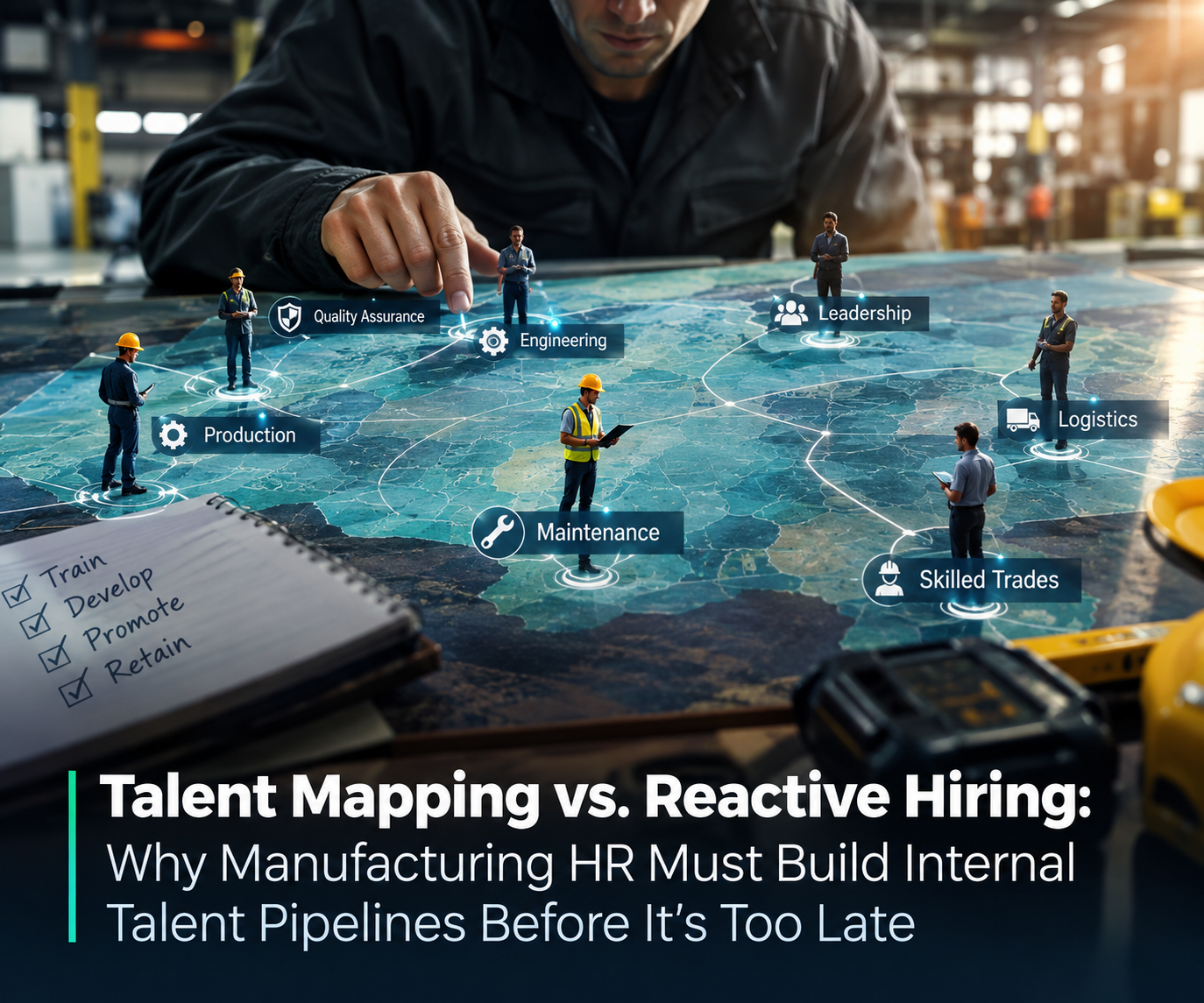
For years, many organizations approached hiring the same way: A position opens. HR scrambles. Recruiters rush to fill the gap. Operations demand speed. Leadership wants results immediately. And for a long time, that reactive model was considered normal. Today, it’s becoming one of the biggest risks facing manufacturing organizations.
Because the labor market has changed. Permanently.
Skilled manufacturing talent is harder to find, harder to retain, and far more selective about where they work. Meanwhile, demand for technicians, operators, engineers, supervisors, and plant leadership continues to rise across the U.S.
The companies winning right now are not simply hiring faster. They’re planning differently. They’re shifting from reactive hiring to talent mapping.
And that changes everything.
The Hidden Cost of Reactive Hiring
Most hiring problems don’t start when someone resigns. They start months, or years, before that moment.
Reactive hiring creates a constant cycle of urgency:
- A supervisor leaves unexpectedly
- Production demand spikes
- Expansion creates immediate labor needs
- A critical skill gap suddenly appears
HR teams are then forced into survival mode.
Job ads go live overnight. Recruiters scramble for candidates. Hiring managers lower standards to fill seats quickly. Training becomes rushed. Culture fit becomes secondary to speed.
The result is predictable:
- Higher turnover
- Poor workforce planning
- Increased safety risks
- Inconsistent onboarding
- Burned-out HR teams
- Rising labor costs
In manufacturing environments, the impact is even greater because labor gaps directly affect operational output.
When production depends on people with highly specific skills, reactive hiring becomes expensive fast.
What Is Talent Mapping?
Talent mapping is the process of proactively identifying the skills, roles, and workforce capabilities your business will need before hiring pressure hits.
Instead of asking: “Who do we need right now?”
Organizations begin asking: “What capabilities will we need six months from now? One year from now? Three years from now?”
That shift changes HR from transactional recruiting into strategic workforce planning.
Talent mapping focuses on:
- Identifying future skill gaps
- Understanding workforce trends
- Building succession pathways
- Tracking internal capabilities
- Creating development opportunities
- Building candidate pipelines before openings exist
It’s not just recruiting. It’s workforce architecture.
Why Skills-First Hiring Matters Now
Traditional hiring models focus heavily on resumes, degrees, and previous job titles.
But manufacturing is evolving too quickly for outdated hiring frameworks.
Automation, robotics, AI-enabled systems, and advanced production technologies are reshaping the industry. Many of tomorrow’s critical roles didn’t exist five years ago.
That’s why skills-first hiring is becoming essential.
Skills-first hiring prioritizes actual capability over rigid credential requirements.
Instead of filtering candidates solely based on experience or education, organizations evaluate:
- Transferable technical skills
- Mechanical aptitude
- Adaptability
- Problem-solving ability
- Leadership potential
- Trainability
This opens access to broader talent pools while also supporting internal workforce mobility.
And in manufacturing, internal mobility matters more than ever.
Your Next Great Hire May Already Work for You
One of the biggest mistakes organizations make is looking externally before evaluating internal potential.
Many manufacturers already employ workers capable of stepping into higher-skilled roles—but lack visibility into those capabilities.
Without talent mapping:
- Internal talent gets overlooked
- Career pathways remain unclear
- Retention suffers
- Employees disengage
- Leadership pipelines weaken
Employees want growth. Especially younger generations entering manufacturing.
Organizations that fail to provide development pathways risk losing talent to competitors who do.
Forward-thinking manufacturers are now building internal pipelines by:
- Mapping employee skills
- Tracking certifications and training
- Identifying high-potential workers
- Building mentorship programs
- Creating leadership development tracks
- Offering upskilling opportunities
This doesn’t just improve retention. It creates workforce resilience.
Manufacturing’s Retirement Cliff Is Accelerating the Problem
Another major issue driving talent mapping urgency is workforce aging.
Large portions of the manufacturing workforce are approaching retirement age. Decades of institutional knowledge are at risk of leaving plants faster than organizations can replace them.
Reactive hiring cannot solve that problem.
Succession planning and internal development must happen long before retirements occur.
Organizations that wait until key employees leave often discover:
- Critical knowledge was undocumented
- No internal successors exist
- Training timelines are longer than expected
- Productivity drops during transitions
Talent mapping allows organizations to prepare before disruption hits.
Technology Plays a Critical Role
Talent mapping cannot operate effectively through spreadsheets and disconnected systems.
Manufacturers need centralized visibility into:
- Workforce skills
- Certifications
- Performance data
- Career progression
- Training completion
- Succession readiness
Integrated workforce systems allow HR leaders to connect hiring, learning, development, and workforce planning into a unified strategy.
This gives organizations the ability to:
- Identify future gaps early
- Develop employees intentionally
- Reduce external recruiting dependency
- Improve retention
- Scale more confidently
Most importantly, it allows HR to move from reactive administration to strategic leadership.
The Future of Manufacturing HR Is Proactive
The manufacturing organizations that thrive over the next decade will not necessarily be the ones with the biggest recruiting budgets.
They’ll be the ones that understand their workforce deeply. The ones building pipelines before vacancies exist. The ones investing in skills instead of simply filling seats.
And the ones treating workforce planning as seriously as production planning.
Because in modern manufacturing, talent is no longer just an HR issue. It’s a business continuity strategy.
