
 5 min read
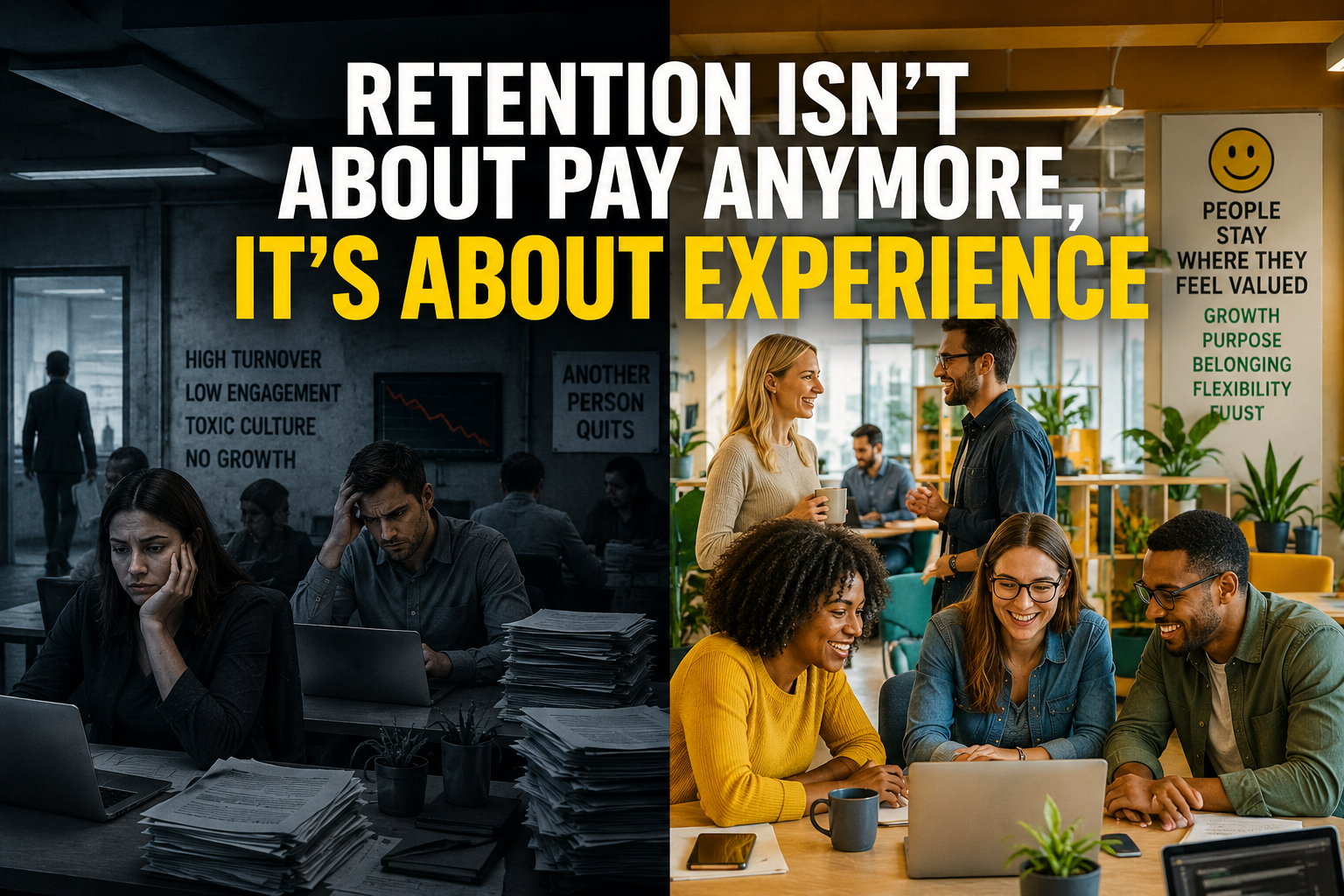
For years, retention was simple.
Pay more, lose fewer people.
That model worked in a world where options were limited, expectations were lower, and visibility into other opportunities was minimal.
That world doesn’t exist anymore.
In 2026, employees aren’t just comparing salaries.
They’re comparing experiences.
And they’re making decisions based on something far more powerful than compensation alone, how it actually feels to work inside your business.
The Shift: From Pay to Experience
Today’s workforce is asking different questions:
- Is my time respected?
- Do systems work, or do they slow me down?
- Do I trust the company to get the basics right?
- Can I do my job without friction?
Because here’s the reality: People don’t leave companies just because of pay.
They leave because of frustration. And frustration builds quietly.
Where Retention Really Breaks
Most organizations assume retention issues come from culture, leadership, or engagement strategy.
Sometimes that’s true.
But more often than not, the real breakdown happens somewhere far less visible:
inside the day-to-day operational experience.
It’s not one big moment. It’s hundreds of small ones.
- Payroll that’s late or incorrect
- Onboarding that feels disorganized
- Systems that require multiple logins and manual workarounds
- Lack of clarity around leave, benefits, or performance
Individually, these seem minor.
Collectively? They erode trust.
And once trust starts to go, retention follows.
The Hidden Cost of Friction
Operational friction doesn’t just impact efficiency. It impacts perception.
Employees start to question: “If the company can’t get this right… what else is broken?”
Managers become reactive, spending time chasing issues instead of leading teams.
HR teams become overwhelmed, stuck in admin instead of driving value.
And slowly, the employee experience shifts from smooth…to frustrating…
to unacceptable.
That’s when people leave.
Not because of one bad day. But because of a thousand avoidable ones.
Why Systems Are Now a Retention Strategy
This is where the conversation needs to change.
Retention isn’t just a people strategy anymore. It’s an operational one.
Because your systems are your employee experience.
They dictate:
- How easy it is to get paid
- How quickly issues are resolved
- How visible information is
- How confident employees feel in the business
If those systems are fragmented, slow, or inconsistent, and no amount of culture messaging will fix it.
What High-Performing Companies Do Differently
The organizations that are winning on retention aren’t just offering better pay. They’re engineering better experiences.
That looks like:
1. Frictionless Operations
Payroll runs smoothly.
Onboarding is structured and consistent.
Processes don’t require workarounds.
2. Real-Time Visibility
Employees and managers have access to the information they need, when they need it.
3. Consistency Across the Business
No gaps between departments, locations, or systems.
4. Speed and Responsiveness
Issues are resolved immediately, not buried in ticket queues.
5. Confidence in the System
Employees trust that the basics will always be handled correctly.
The Outcome: Trust, Not Just Satisfaction
When systems work, something powerful happens.
Employees stop thinking about HR. And that’s a good thing.
Because it means:
- Payroll is right
- Processes are clear
- Support is there when needed
That creates trust. And trust is what keeps people.
The Bottom Line
Retention isn’t lost in exit interviews. It’s lost in everyday experiences.
In the small moments where systems fail, processes break, and employees feel the friction.
The companies that understand this don’t just invest in engagement. They invest in infrastructure.
Because when the operational experience is strong:
- Employees stay
- Managers lead
- HR drives strategy
And the business scales without losing its people.
Not just pay. Experience.
