
 7 min read
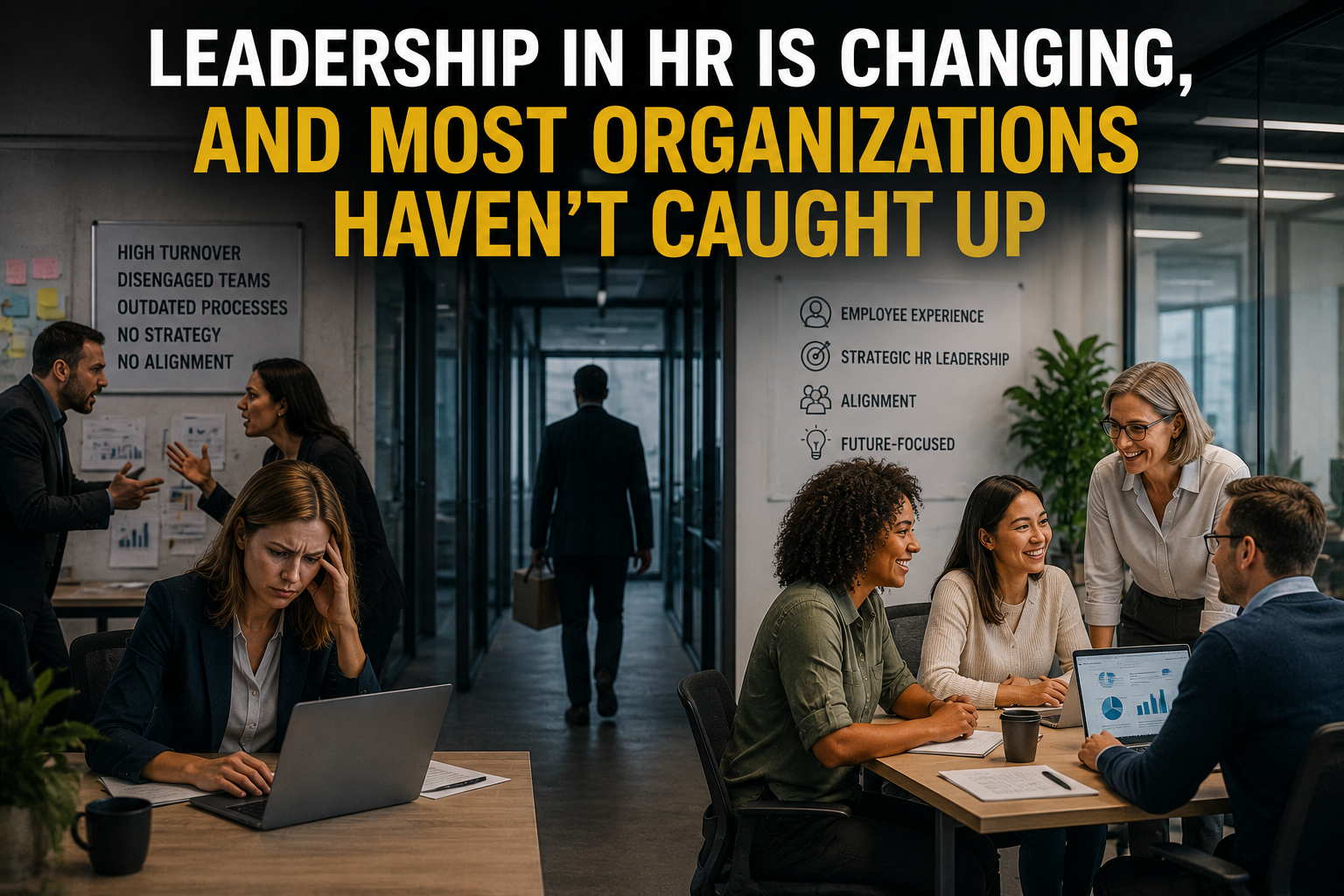
There was a time when HR leadership was largely measured by operational efficiency.
Did payroll run correctly?
Were benefits administered?
Was compliance maintained?
Were policies updated?
Those things still matter. Deeply. But the role of HR leadership has evolved far beyond administration, and many organizations are still struggling to adapt.
Today, HR leaders sit at the center of workforce transformation, business continuity, culture, retention, productivity, and organizational growth. The challenge is that while expectations have changed, many HR departments are still operating inside systems, structures, and workflows built for a completely different era of work.
And that gap is creating pressure.
The Modern HR Leader Is Carrying More Than Ever
Over the last few years, HR leaders have become responsible for navigating some of the most complex workplace shifts in decades:
Rapid workforce expansion
Labor shortages
Burnout and retention challenges
Compliance complexity
Distributed teams
Generational workforce shifts
Technology transformation
Leadership development
Employee wellbeing
At the same time, executives are asking HR to deliver strategic insight, improve workforce performance, strengthen culture, and support growth initiatives.
The expectations are enormous.
But here’s the uncomfortable truth many organizations avoid discussing:
You cannot expect strategic HR leadership from teams trapped in administrative overload.
And that’s exactly where many HR departments are today.
HR Teams Are Drowning in Operational Noise
In many organizations, HR leaders spend more time chasing approvals, correcting payroll issues, managing spreadsheets, answering repetitive questions, and fixing disconnected processes than they do leading people strategy.
The result is reactive HR.
Not because HR lacks capability, but because the environment forces teams into survival mode.
This is especially true in industries experiencing rapid growth or operational complexity. Manufacturing, healthcare, logistics, construction, and multi-location organizations often place extraordinary pressure on HR teams without scaling the systems that support them.
As headcount grows, complexity multiplies:
More onboarding
More compliance tracking
More reporting demands
More employee communication
More scheduling issues
More payroll variables
Without structure and scalable systems, HR becomes buried under administration.
And when that happens, the business loses one of its most important strategic functions.
Leadership in HR Requires Visibility
One of the biggest shifts in modern HR leadership is the need for workforce visibility.
Strong HR leadership today is deeply connected to data:
Retention trends
Turnover patterns
Labor costs
Hiring bottlenecks
Productivity metrics
Training completion
Compliance risk
Employee engagement
The organizations leading the future of work are not making workforce decisions based on assumptions. They are using real-time workforce intelligence to guide strategy.
But many HR teams still operate across disconnected systems:
Recruiting in one platform
Payroll in another
Training tracked manually
Performance conversations are happening offline
Compliance data living in spreadsheets
Disconnected systems create disconnected leadership.
When leaders lack visibility, they lose the ability to proactively solve problems before they become operational risks.
Culture Does Not Scale Automatically
One of the most underestimated responsibilities of HR leadership is protecting organizational culture during growth.
Culture is easy to maintain when teams are small. It becomes significantly harder when organizations expand across locations, departments, and leadership layers.
Without intentional leadership, growth creates fragmentation:
Inconsistent communication
Different standards between teams
Disconnected employee experiences
Confusion around expectations
Leadership inconsistency
Employees stop feeling connected to a shared mission.
And once culture weakens, retention usually follows.
The strongest HR leaders understand that culture cannot be left to chance. It must be reinforced through leadership development, communication, onboarding, accountability, and employee experience strategies that scale with the organization.
The Future of HR Leadership Is Operational + Strategic
The old idea that HR is either “administrative” or “strategic” misses the point entirely.
Modern HR leadership requires both.
Great HR leaders understand operations deeply because operational failures directly impact people:
Payroll errors damage trust
Poor onboarding hurts retention
Compliance failures create risk
Broken communication impacts morale
But they also understand that people strategy drives business outcomes:
Retention impacts profitability
Engagement affects productivity
Leadership quality shapes culture
Workforce planning influences growth
The future belongs to HR leaders who can bridge both worlds.
Technology Alone Won’t Solve Leadership Challenges
There’s an important distinction organizations need to understand:
Technology can enable HR leadership, but it cannot replace it.
Too many organizations purchase software expecting transformation to happen automatically.
It doesn’t.
Without process alignment, leadership buy-in, training, communication, and operational discipline, even the best systems become underutilized.
That’s why successful organizations focus not only on technology adoption but on operational partnership, leadership alignment, and workforce strategy.
Because ultimately, leadership is not about software.
It’s about creating an environment where people, systems, and processes work together effectively.
HR Leadership Is Now Business Leadership
The most important shift happening in organizations today is this:
HR leadership is no longer a support function operating in the background.
It has become one of the most influential drivers of organizational stability, growth, and long-term performance.
The companies that recognize this are building stronger cultures, scaling more effectively, retaining talent more successfully, and navigating change with greater resilience.
The ones that don’t?
They often discover the cost too late, through burnout, turnover, operational breakdowns, and leadership fatigue.
The future of work will not be shaped by organizations with the most policies.
It will be shaped by organizations with the strongest leadership.
And increasingly, that leadership starts in HR.
