
 4 min read
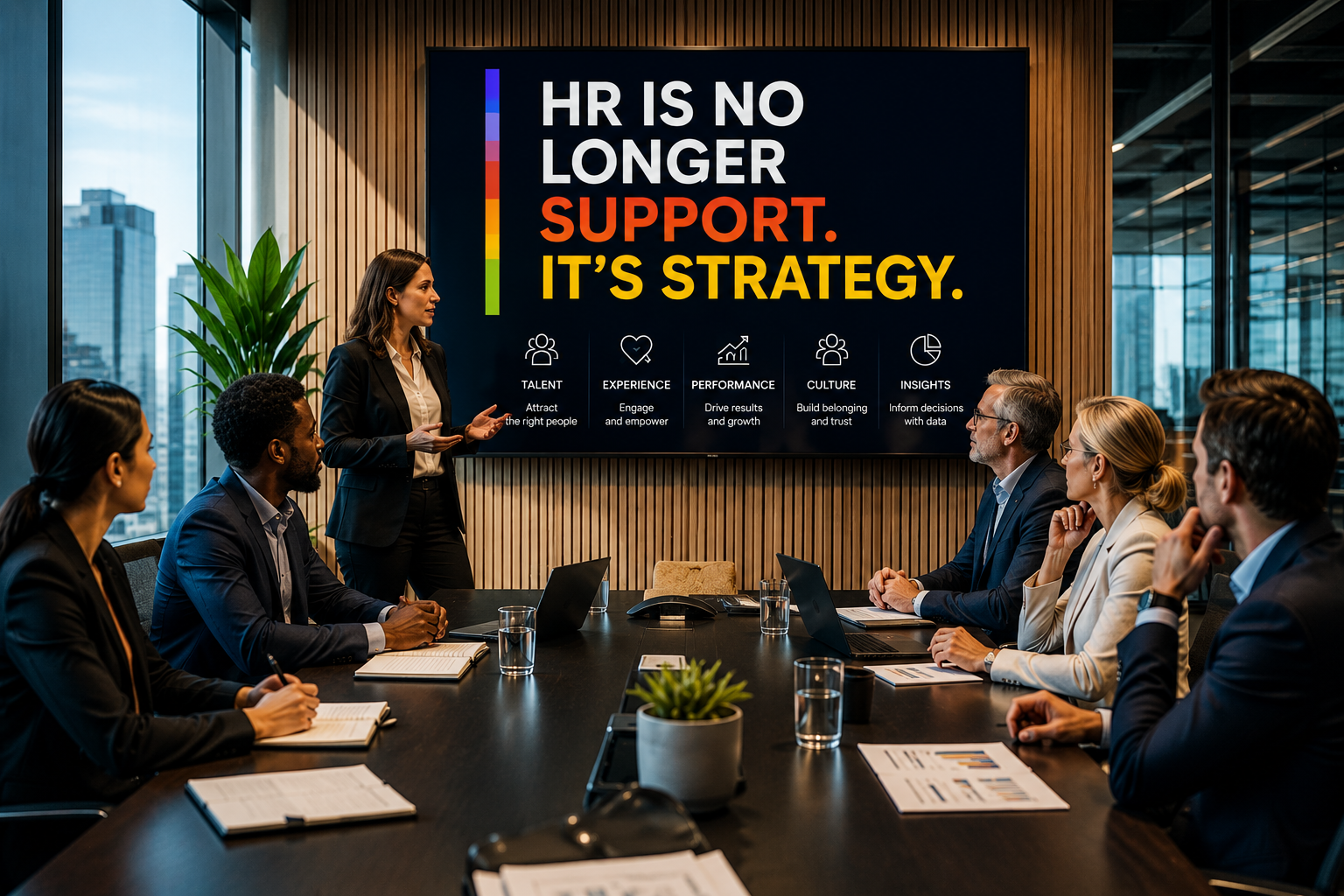
There was a time when HR was viewed as a support function.
A department responsible for hiring paperwork, payroll administration, benefits enrollment, and compliance management. Necessary work, but rarely seen as business-critical work.
That time is over.
Today, HR sits at the center of organizational performance. Not on the sidelines. Not in the background. At the center.
Because every major business challenge today is ultimately a workforce challenge.
Growth depends on talent. Retention impacts profitability. Culture drives productivity. Leadership affects engagement. Workforce stability influences customer experience.
And executives know it.
That’s why expectations around HR have fundamentally changed.
HR is no longer being asked to simply “manage people.” It’s being asked to drive measurable business outcomes.
The modern HR leader is expected to influence workforce strategy, improve operational efficiency, support organizational scalability, reduce turnover risk, strengthen culture, improve employee experience, and provide leadership with real-time workforce intelligence.
That’s not support work. That’s business leadership.
But here’s the problem almost every HR team is facing right now:
The expectations became strategic. The workload stayed operational.
Across the U.S., HR teams remain buried under administrative pressure:
- Payroll processing
- Manual reporting
- Compliance tracking
- Benefits administration
- Timekeeping issues
- Employee documentation
- Audits
- Corrective action workflows
- Hiring administration
- Workforce scheduling complexity
All of it matters. None of it moves HR closer to strategic leadership.
This is the defining tension in modern HR.
Organizations want HR to operate as a strategic driver of the business, yet many HR departments are still spending the majority of their time managing systems, fixing process gaps, chasing paperwork, and reacting to operational problems.
And the consequences are significant.
When HR is trapped in administration:
- Workforce planning becomes reactive
- Retention risks go unnoticed
- Employee experience deteriorates
- Leadership lacks workforce visibility
- Strategic initiatives stall
- Burnout increases inside HR itself
The reality is simple: HR cannot lead the business while constantly buried in manual work.
This is where technology, automation, and operational design become critical, not as “nice-to-have” tools, but as strategic infrastructure.
The organizations making real progress are removing friction from HR operations entirely.
They are automating repetitive workflows. Eliminating duplicate data entry. Integrating payroll, HR, benefits, recruiting, and workforce management into connected ecosystems. Giving leadership real-time visibility into workforce trends instead of static monthly reports.
Because strategy requires visibility.
And visibility requires systems that actually support decision-making instead of creating more administration.
Modern HR leaders need:
- Real-time workforce analytics
- Scalable workflows
- Intelligent automation
- Simplified compliance management
- Connected employee data
- Faster access to operational insights
Not because technology replaces HR—but because it finally allows HR to operate at the level the business expects.
The future of HR is not administrative leadership.
It’s operational strategy.
The companies winning the next decade will be the ones that recognize HR as a business performance function, not a back-office department. They will invest in giving HR teams the tools, systems, and visibility required to influence growth at a strategic level.
Because workforce decisions now shape every part of the business:
- Productivity
- Profitability
- Retention
- Scalability
- Culture
- Innovation
- Customer experience
HR is no longer support.
It is one of the most important strategic functions inside the modern organization.
