
 2 min read
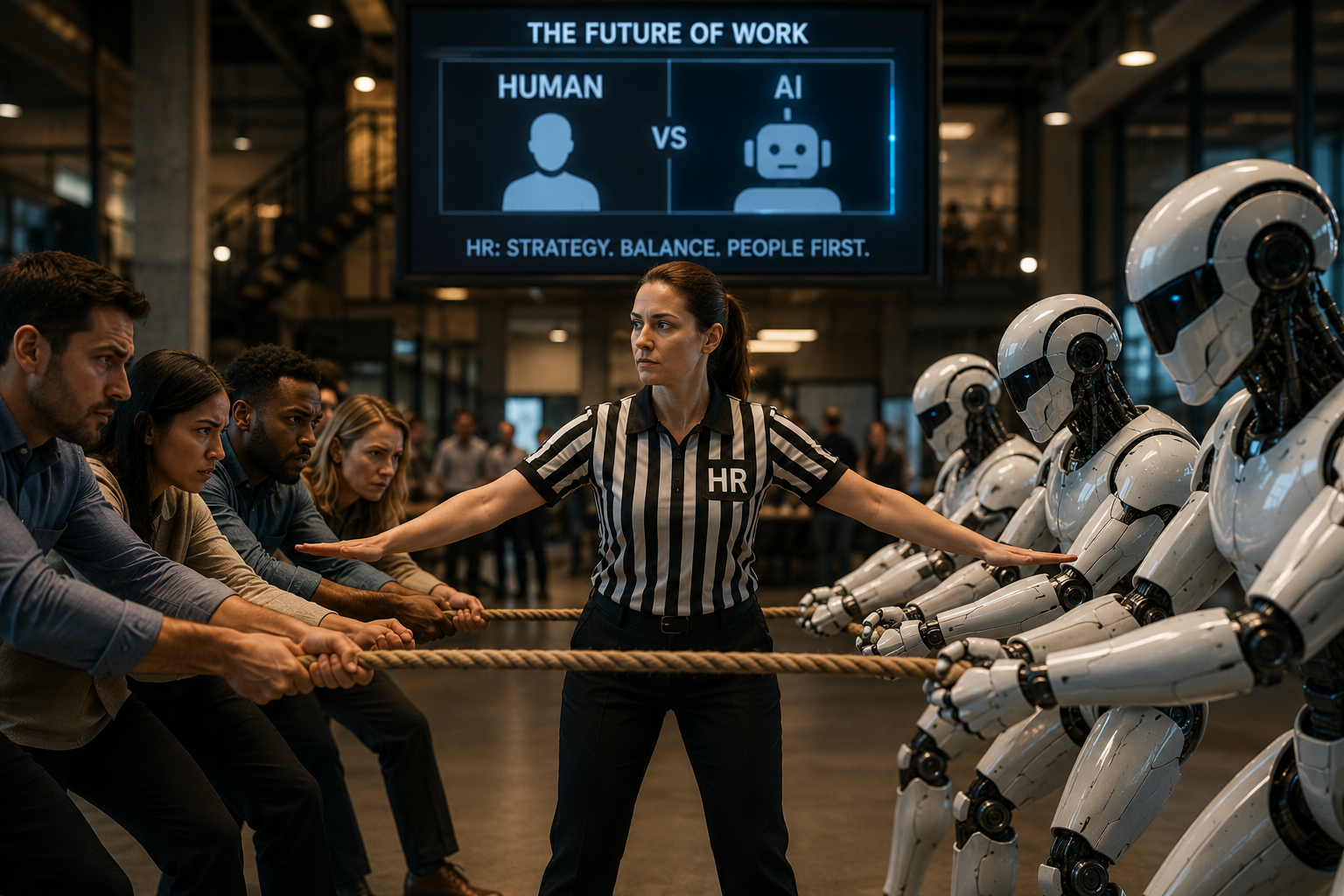
The workforce is changing, and not in a subtle way. We’re no longer talking about remote vs. in-office. We’re now talking about human vs. machine.
AI is becoming part of the workforce.
And that shift is forcing HR to rethink everything, from job design to performance management to workforce planning.
But most organizations are still operating as if nothing has changed.
Roles are still structured around manual effort. Processes still assume human execution. Systems are still designed for static workflows.
That’s the disconnect.
Because AI doesn’t just improve efficiency, it changes how work gets done.
Tasks that used to take hours are now completed in minutes. Decisions that relied on instinct are now driven by data.
And that creates both opportunity, and risk.
The opportunity is obvious:
Faster execution, better insights, and more strategic HR functions.
The risk? Misalignment.
If organizations don’t redesign work around this new reality, they end up with:
- Overloaded teams
- Underutilized technology
- And a workforce that feels disconnected from the tools meant to support them
Managing a hybrid workforce isn’t about replacing people with AI. It’s about redefining how people and technology work together.
That requires:
- Clear role evolution
- Smarter workflows
- Systems that integrate seamlessly
Because the future of HR isn’t human or machine. It’s both,working in sync.
